

If you asked someone to think about a parrot, there is a good chance they would picture a large, brightly colored bird with a curved bill, perhaps sitting on a branch and saying something cheeky in a human voice. Ask them to name one, and things become surprisingly complicated. And if you were hoping to find them all in a photographic archive, searching for “parrot” alone might not get you very far.
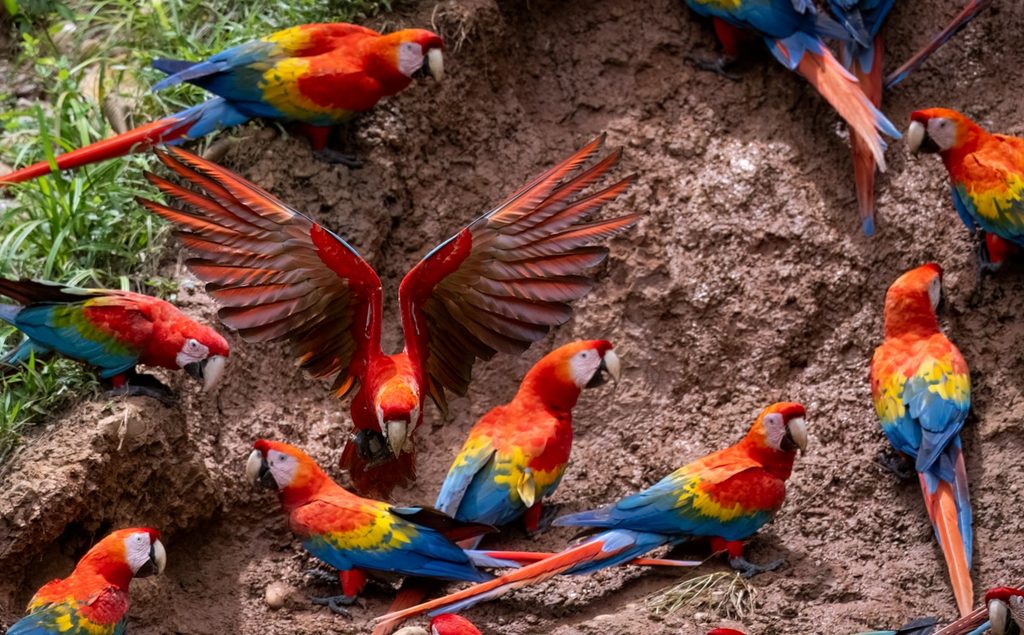
Owen has photographed parrots in 13 countries, building an archive of extraordinary variety. You would reasonably expect a search for parrots on his website to reveal a dazzling collection of hooked bills, brilliant plumage, and unmistakable personalities. But here’s the catch: what if the bird you’re looking for isn’t called a parrot at all?
Parrots belong to the order Psittaciformes, a diverse group whose members share characteristic features such as strong, curved bills and gripping feet. Yet their common names are wonderfully varied. Some are called parrots, of course, but others are macaws, parakeets, parrotlets, lovebirds — or have names that give little hint of their family connections.

A Scarlet Macaw is every bit as much a parrot as a Sun Parakeet. A cockatoo, with its expressive crest, belongs to the same order, as does a tiny lovebird, whose name sounds more like a term of endearment than a taxonomic clue. And a budgerigar? It may be one of the world’s most familiar cage birds, but its common name doesn’t give away its place among the parrots either. Cockatoos and cockatiels are absent from Owen’s archive, however — perhaps unsurprisingly, given that his travels have yet to take him to Australia, where these distinctive parrots are native.
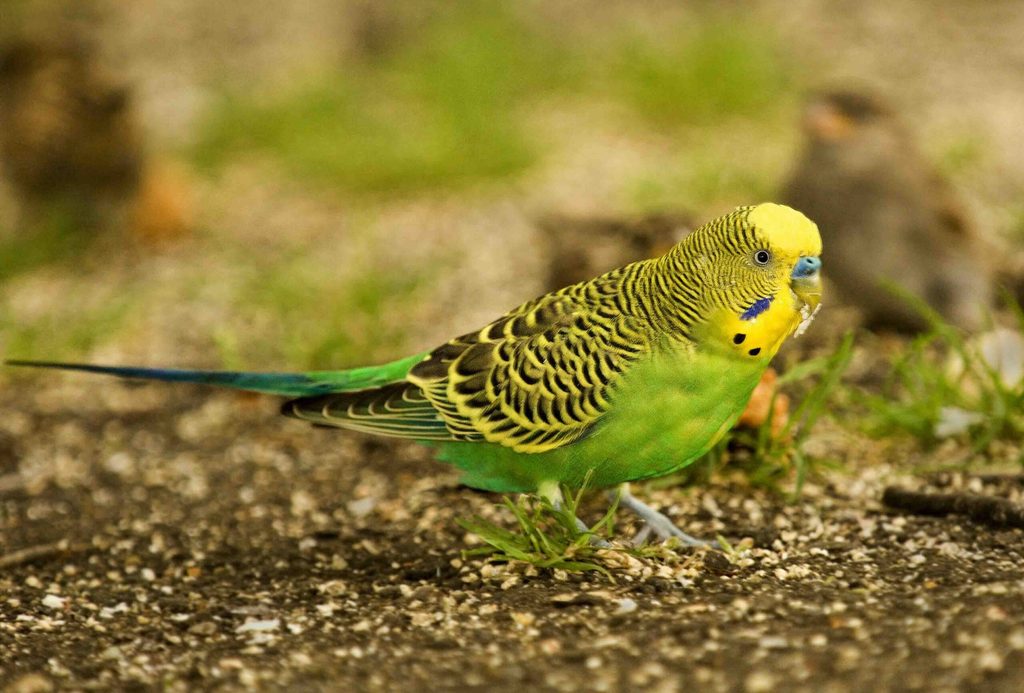
These names reflect a mixture of history, appearance, behavior, and tradition. “Macaw” and “parakeet” aren’t separate taxonomic orders; they’re common-name groupings within the parrots. The word “parrot” itself is used inconsistently in everyday naming, sometimes as a broad label and sometimes as part of a particular species’ name. There isn’t always a neat linguistic rule to follow.
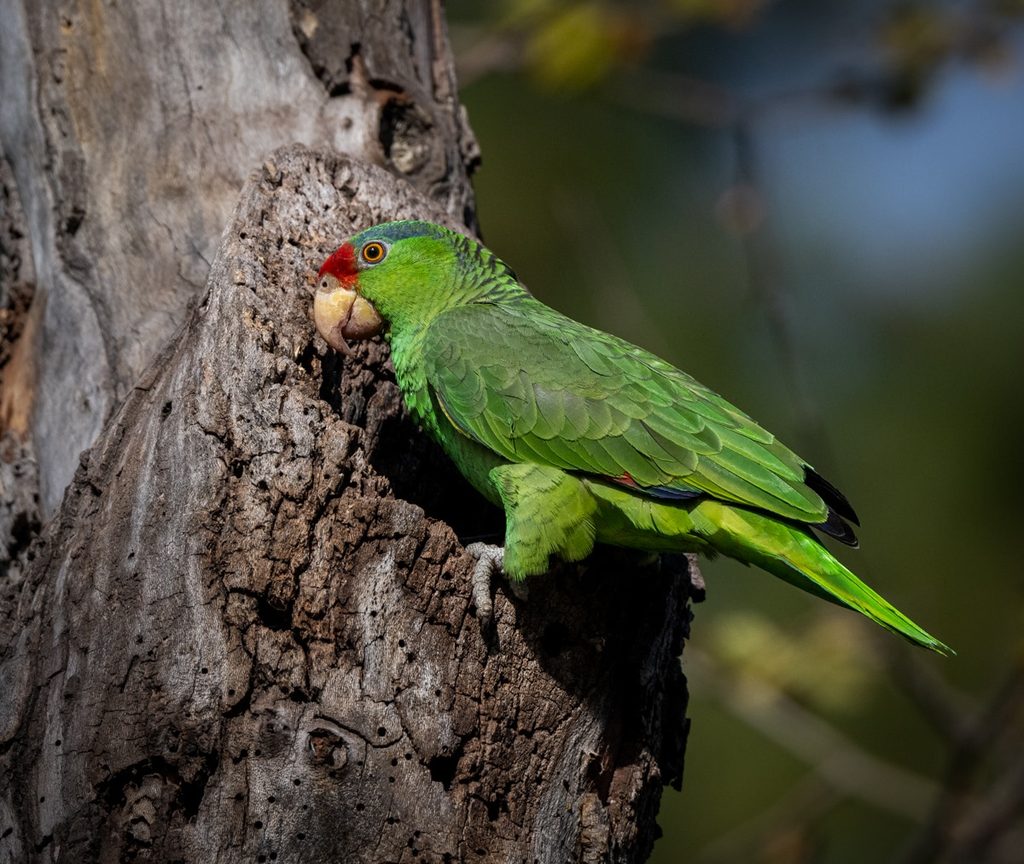
Owen and his team have encountered this problem firsthand. A bird photographed in San Diego was listed as a Red-crowned Parrot, but it is also known as the Red-crowned Amazon or Red-crowned Amazon Parrot. To help visitors find it using whichever name they search for, the team decided to adopt the full name, Red-crowned Amazon Parrot, on the website. It’s a small change that makes a real difference to how easily a photograph can be found.
And the naming muddle has a very practical effect on what appears in Owen’s archive. A general search for “parrot” brings up 62 images representing 28 different species. That’s a lovely collection in itself, but as curators of Owen’s site, we know that the broader parrot listings include 57 species. In other words, more than half of those species won’t appear using the word “parrot” alone.
So how do you uncover the rest? Owen’s website lets you search by taxonomy, where parrots are grouped under Psittaciformes. The site divides them into two families: Psittacidae, which includes African and New World parrots, and Psittaculidae, which includes Old World parrots. Both belong to the same order, so selecting Psittaciformes brings the broader group together — regardless of what each bird is called.
It’s a useful reminder that the natural world doesn’t organize itself around the words we happen to use. Owen’s archive reflects both the remarkable diversity of the parrot family and the places he’s travelled to photograph it. For anyone exploring the collection, knowing a little more about taxonomy can reveal birds that a simple search might miss. Sometimes, finding the bird you’re looking for means looking beyond what it’s called — and understanding a little more about what it is.
