


When you think of Christmas birds, the cheerful robin in Europe or the vibrant northern cardinal in the U.S. likely come to mind. These iconic creatures have long symbolized the warmth and joy of the season, appearing on holiday cards, decorations, and festive stories. But why stop there? The avian world is full of fascinating birds that can bring fresh charm and meaning to the holidays.
In the UK since Victorian times, the European robin has been the symbol for Christmas, despite being a resident bird to the British Isles and often seen all year round, although it is much easier to see their red breasts against a backdrop of snow. In the USA, the American robin (named after the European robin because of their vibrant chest) and the Northern cardinal are a common Christmas-associated bird for this same visually pleasing contrast.
However, St Nicholas—the figure associated with Christmas in many traditions—has worn coats of various colors as well as red, including green, white and gold, and while the Coca-Cola brand was largely responsible for cementing the color red for Christmas in our material minds with its huge seasonal advertising campaign, scarlet has always been associated with gift-giving. That’s why some contenders for an alternative avian embodiment to everyone’s favorite time of year also tend to be red.

The Red Crossbill
If there are any two colors inexorably associated with Christmas, it’s green and red. This small yet chunky finch comes in both colors with female and male plumage respectively. The bird’s name comes from the crossed over tips of their upper and lower mandibles of their bill, something that advocates point to is also a little Christmassy in the form of the crucifix. This adaptation to their bills helps them pluck out seeds from between the scales of the cones on evergreen trees, whose seeds they eat. As they also live in places with these types of trees—pines, spruces, and firs—the association with Christmas deepens. They are also said to symbolize togetherness, giving, and family. The characterization is complete.

The Black-Capped Chickadee
These tiny, cheerful birds bring a much-loved warm and lively energy to the winter season. With its classic black cap and bib, set off by white cheeks and a warm gray body, the chickadee is instantly recognizable to bird enthusiasts in North America. Known for its friendly nature, the chickadee often appears near feeders in winter, brightening cold, snowy days with its distinctive “chick-a-dee-dee-dee” call. Adding to their allure, their resilience means they thrive in harsh winter climates, often seen bustling around in snowy forests. Their boldness in approaching humans may also serve as a reminder of the kindness and fellowship associated with the holiday.
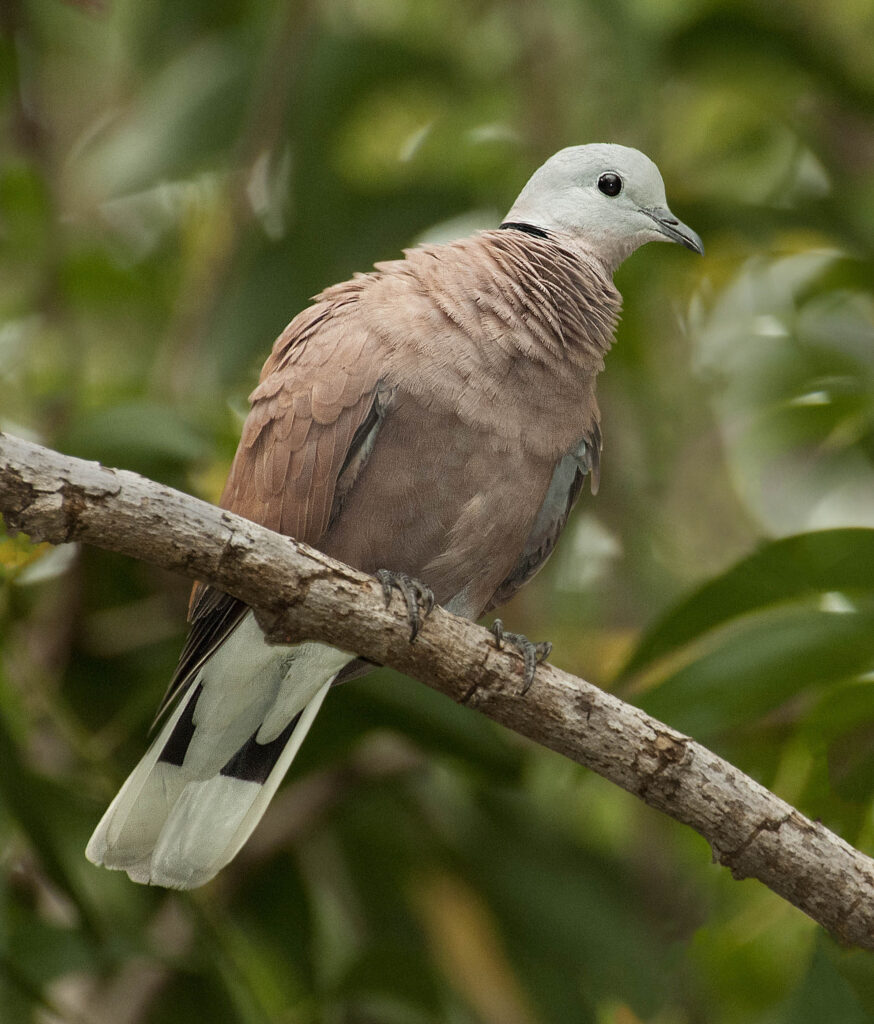
The Turtle Dove (or two)
The popular Christmas carol, “The Twelve Days of Christmas” of course contains several birds, but the entire song is believed by some to have originated as a secret catechism song used by Catholics in England during a time when they were persecuted, for children to covertly learn the secrets of their faith. “My true love” who bestows the many gifts is said to actually refer to God rather than a suitor with an impressive if increasingly bizarre present list. According to this interpretation, the seemingly nonsensical gifts in the song were symbolic representations of elements of Catholic faith, and in this context, the two turtle doves represent the Old and New Testaments of the Bible. While this theory is debated, and historical evidence linking the song definitively to persecution is limited, it does provide a fascinating perspective on the carol’s possible layered meanings. In Luke 2:24, Mary and Joseph offered turtle doves as a sacrifice at the temple after Jesus’ birth, tying the bird to the Nativity story, thereby placing turtle doves as a firm favorite for an alternative Christmas bird.

The Swan
The swan has long been a symbol of beauty, elegance, and purity, and is also a common sight in many Christmas carols and winter imagery. Particularly famous as one of the “seven swans a-swimming” in The Twelve Days of Christmas, the swan is deeply embedded in the festive tradition. With its snowy white plumage, the swan is a fitting representation of winter, often gliding gracefully across icy lakes. Said to represent grace and peace, unity, and love, along with their fabled transformation from an awkward cygnet to a graceful adult, they are often seen as a metaphor for the Christmas traditions of faith, hope, and new beginnings.
